
 By Writer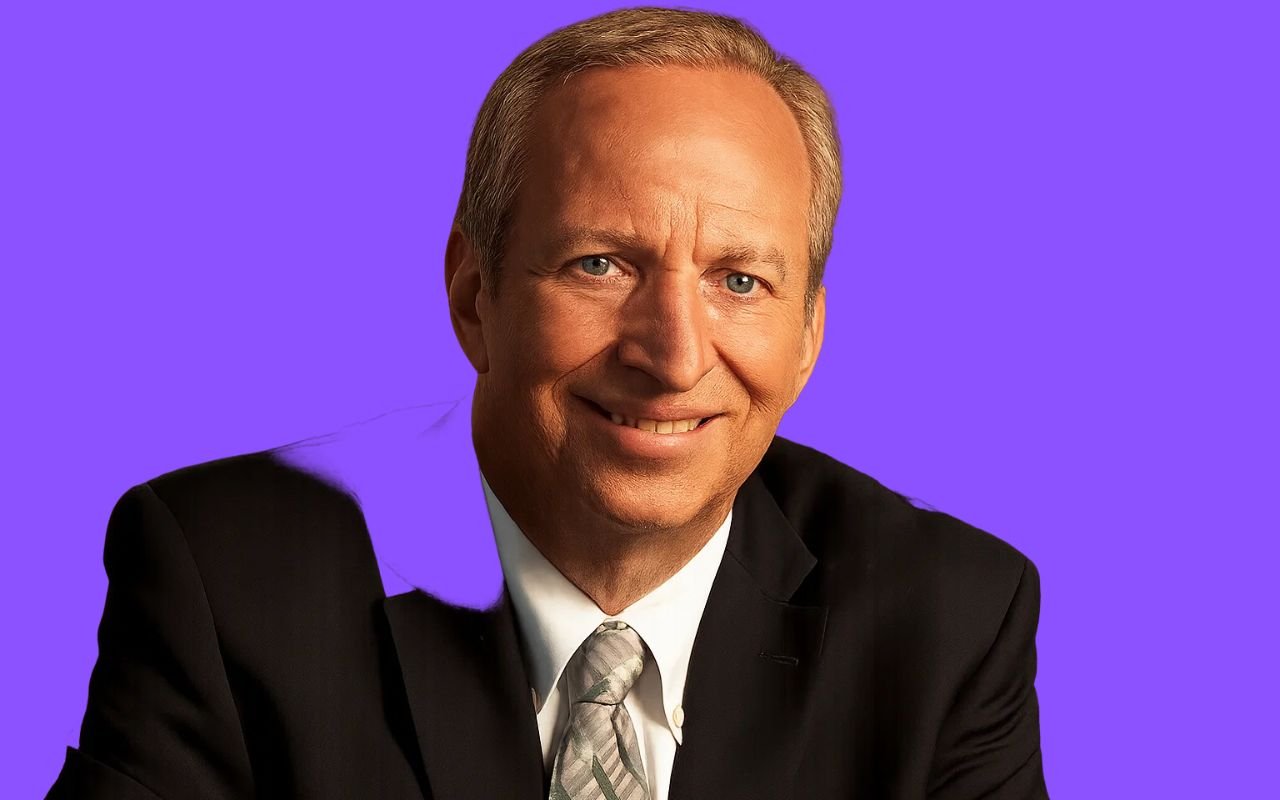
Few figures in the world of economics and public policy are as ubiquitously known, respected, and controversial as Larry Summers. A cerebral heavyweight,who’s dipped in and out of the upper echelons of academia and government alike, Summers helped to shape American – and global- economic policy over many years. From serving as the 71st Secretary of the Treasury under United States President George W.
Bush to his time in office as the 27th President of Harvard University, his path is a riveting tale of aspiration, intellect and that intricate dance between theory and practice. 1 லாரி & INTERVIEW – In a rare, exclusive interview with ET NOW’s Consulting Editor Mythili Bhusnurmath, former US Secretary of Treasury Larry Summers speaks about how the West must learn from India if they want to tackle poverty.
Quick Bio
|
Detail |
Information |
|---|---|
|
Name |
Lawrence “Larry” Henry Summers |
|
Age |
70 (as of November 2025) |
|
Profession |
Economist, Professor, Former Government Official |
|
Parents |
Robert Summers, Anita Summers |
|
Siblings |
Not publicly known |
|
Birthplace |
New Haven, Connecticut, USA |
|
Net Worth |
Estimated between $40 million and $50 million |
|
Social Media |
X (Twitter): @LHSummers |
Early Life & Education
To think about the arc of Larry Summers’s professional life, you have to consider his early boyhood. Lawrence Henry Summers was born Nov. 30, 1954, in New Haven, Conn., to a world of intellectual rigor. Raised in a family of eminent economists, dinnertime discussion was frequently as if the economics department were having an intellectual powwow. It was an environment that led to a powerful curiosity and a keen analytical mind.
He graduated from Lower Merion High School in Ardmore, Pennsylvania and where there he excelled in mathematics and debate. He wasn’t merely an amateur thinker, however; his mind was a fundamental aspect of who he was. 16 years old, he enrolled in the Massachusetts Institute of Technology (MIT), with hopes to become a physicist but soon he realized that his passion was for economics.
He earned a Bachelor of Science in 1975. He continued his studies at Harvard University and received his Ph. D. in 1982 with economist Martin Feldstein as his adviser. He won a reputation as something of a braggart at both M.I.T. and Harvard, an extremely bright but sometimes comically arrogant (and that was how he would increasingly be perceived when his public life began) young man.
Family Background
It’s in Larry Summers’ intellectual lineage to do so. He was part of a kind of dynasty of economists. His parents, Robert Summers and Anita Summers, were distinguished economics professors at the University of Pennsylvania. They were famous for their work on the Penn World Table, a major data set for comparing economic output among countries.
The sway carried over to the economy as well; he is a nephew of two Nobel laureates in economics. His uncle on his father’s side was the Nobel laureate economist Paul Samuelson, considered one of the founders of contemporary economics; he won the 1970 prize in Economic Sciences.
His mother’s brother was Kenneth Arrow, who won the Nobel Prize in 1972 for his groundbreaking work on general equilibrium theory. It was his extraordinary family environment, that was not just a genetic propensity but an enormously influential context in which he grew up. Growing up with a steady dose of complex economic theories and debates from childhood had only stoked his ambition and prepared him for an A-list private-equity career.
Career Journey
The career of Larry Summers has been a fast-paced roller-coaster ride through academia and government. After earning his Ph. D., and in 1982 returned to MIT as an assistant professor before a swift move to Harvard University in 1983, where at age 28 he achieved tenure, one of the youngest members of the faculty ever awarded tenure. His early research was diverse including studies of public finance, labor economics, and macroeconomics, and he quickly became known as a highly productive and thoughtful academic.
He entered public service in 1991, as Vice President of Development Economics and Chief Economist of the World Bank. During his tenure, he was a central figure in developing the bank’s approach toward developing countries, but also faced criticism for a controversial 1991 memo that he signed, which included an argument for the economic logic of exporting pollution to less-developed nations. He entered the Clinton administration in 1993, working first as Under Secretary of the Treasury for International Affairs and later serving as Deputy Secretary of the Treasury.
In 1999, he became the 71st Secretary of the Treasury. He was a central player in the administration’s response to the Asian financial crisis and other global economic crises. He was also a proponent of financial deregulation, including the repeal of the Glass-Steagall Act, a move later criticized for contributing to the 2008 financial crisis.
Summers resigned as Harvard’s president in the wake of a no-confidence vote by Harvard faculty, which resulted from controversy regarding remarks about inherent cognitive differences between men and women. His presidency was characterized by bold efforts, such as greater financial aid for low- and middle-income students as well as making a dramatic enhancement of the university’s science and engineering programs.
But his term was not without controversy, including a public spat with Professor Cornel West and statements in 2005 that suggested innate aptitude differences might play a role in the underrepresentation of women in science and engineering. There was a subsequent backlash from the faculty resulting in his resignation in 2006.
His time in public service was not finished. In 2009, he was selected by President Barack Obama to serve as Director of the National Economic Council. In that role, Summers played a central role in shaping the administration’s response to the Great Recession and helped shepherd the American Recovery and Reinvestment Act of 2009. He joined the faculty of Harvard after leaving the Obama administration in 2010, becoming Charles W. Eliot University professor there. He also worked in the private sector as a consultant for financial firms and on multiple corporate boards, which bolstered his net worth.
Major Achievements
During a varied career, Larry Summers has racked up an impressive set of accomplishments, which have had profound impact on economic policy and the world of thinking about all things economic. As Treasury Secretary, he guided the U.S. through an era of global economic tumult that saw a meltdown in Mexican markets and an Asian financial crisis. His leadership helped to limit the fallout and to foster economic recovery. He was also a fierce champion of debt relief for highly indebted poor countries, a policy that had an enduringly positive influence on the developing world.
Controversies aside, he managed to get some revolutionary steps through as Harvard’s president. He transformed the university’s financial aid commitment, enabling students whose families earned below a certain threshold to attend tuition-free. He also led a sweeping curriculum review and launched a massive buildout of Harvard’s campus into Allston, setting the stage for future expansion in science and technology research.
As director of the National Economic Council under President Obama, his most important accomplishment was involving in shaping the administration’s response to the 2008 financial crisis. He was a leading voice in crafting the $800 billion stimulus package, which many economists believe helped prevent a worse and longer depression. The work he undertook during this time, which remains contested by both sides of the political spectrum, was critical in helping stabilize the U.S. economy at a moment of deep crisis.
Awards & Recognition
Both Summers’s position and contributions in the field of economics have been greatly regarded by his contemporaries. In 1987 he was the first social scientist to win a National Science Foundation Alan T. Waterman Award, which recognizes outstanding young researchers. In 1993, he received the American Economic Association’s John Bates Clark Medal, a prize awarded to the American economist under 40 who has made the greatest contribution to economic thought and knowledge.
This prize is sometimes viewed as a stepping stone to the Nobel Prize, and it solidified his place among the most important economists of his time. He is also a fellow of the Econometric Society and a member of the American Academy of Arts and Sciences, indicating his high standing in academia.
Personal Life
In private life Larry Summers reveals some interesting things about his character: He has been married twice. He was first married to Victoria Perry, with whom he has three children: twin daughters Ruth and Pamela, and a son Harry. He married Elisa New, an English professor at Harvard University, in 2005 after his divorce. His family, including his children and his wife, exerts a grounding force in a life often spent in the high-stakes worlds of politics and finance.
Associates and friends say he is fiercely loyal and devoted to his family. Despite his public image as an intellectually-assertive man who won’t beat about the bush, he is also more complex than his public face would suggest. His experiences, such as handling the glare of public scrutiny and recovering from career setbacks tabloid headlines – have undoubtedly informed his thinking, lending resilience and reflection to his impressive brain.
Net Worth & Income Sources
As an influential individual in the public and private sector, Larry Summers net worth is a topic of great debate. His net well worth is considered to become in tens of thousands – although some sources state something extra with assessments achieving anywhere from such as between $40 million and $50 million. Despite the lucrative government and academic salaries he has received, much of the senator’s wealth came from his private-sector work after each time he left public office.
These include his lucrative speaking tour, in which he charges big bucks to share his monetary wisdom. And he has taken in significant sums for consulting, working with major financial institutions including the hedge fund D.E. Shaw and sitting on a few corporate boards. That mix of public service and private enterprise is typical for high-profile economists, and has enabled him to accumulate significant personal wealth.
Social Media Presence
Larry Summers has taken to social media in recent years, commenting on the economy and disputing public arguments. He is more active on X (formerly the Twitter) which has enabled him to build a considerable following of other journalists, economists, decision-makers and concerned citizens.
Enter his handle, @LHSummers, a magnet for his real-time analysis of economic data, policy proposals and world events. He takes to the platform to share his ideas about everything from inflation and central-bank policy, to geopolitical risks and technological disruption. His posts are typically brief, direct and evidence-based – firing up huge exchanges. It is this social media platform that allows him to have influence over the public debate and policy outside of academia or mainstream media.
Lesser-Known Facts
Behind the news and job titles, there are many things you may not know about Larry Summers that give a full view of the man. For example, he is widely regarded as a fearsome intellectual, but also to have an academic and somewhat dry humor. An interesting tidbit is his fight against Hodgkin’s Lymphoma during the late 20s. It all gave him a much different view of life and ambition after facing a serious health crisis in his 20s.
He is also a keen tennis player, which he does not only for the competitive outlet but also for respite from his intensive intellectual activity. Most remarkably to those who cannot escape the fact that he is, at face value, associated with establishment economics, he’s not afraid to say when he has been wrong. He has for example publicly thought about what was wrong with financial deregulation, and moved his thinking on the mens sets of fiscal policy over time.
Influence & Legacy / Breaking News or Recent Developments
The influence of Larry Summers on modern economics is unambiguous, if complex and controversial. He is a central figure of the neoliberal consensus, which shaped economic policy in the latter part of the 20th century and championed globalization as well as financial deregulation. But he has since had a change of heart, especially after the 2008 financial crisis and COVID-19 have depleted the budget. He would become one of the leading voices warning about the dangers of “secular stagnation” — a theory holding that advanced economies are vulnerable to prolonged periods of weak growth and low interest rates.
More recently, Summers was an early and loud critic of the fiscal and monetary policy response to the pandemic, correctly forecasting that the size of government stimulus spending, especially that introduced by the American Rescue Plan in 2021, would create substantial inflationary pressures. His warnings, ignored by many at first, have since proved prophetic and helped overturn the debate over macroeconomic management.
He remains a popular commentator on economic matters, often penning articles for leading media outlets and appearing on financial news stations. Among his most recent research are discussions of how to manage inflation risks without causing a recession; the economics of trade disputes and other geopolitical conflicts; and the future of global economic cooperation. His is the legacy of a brilliant, influential, and frequently polarizing economist who has never backed down from a good intellectual dust-up and whose ideas continue to inform the most vital economic arguments of the day.
Conclusion
Larry Summers’s journey is in itself a compelling story about the power of one brilliant mind to change history. From Harvard’s classrooms to the halls of the White House, his career has been marked by a relentless effort to study and influence the economic forces that determine our fate. It is a sumptuous legacy, although one partly overshadowed by both towering successes and public controversies as he sought to extend the frontiers of economic thought and policy.
His story is a reminder that influence is not about titles and power but having the courage to take up hard battles, question received wisdom and change your mind when faced with new evidence. As Larry Summers adds his sonorous voice to efforts appropriate to our time, he is a living lesson in the durability of ideas. His path calls us-innovators, entrepreneurs, owners and shareholders alike-to a new awareness of the complexity of leadership and an understanding that we all share a deep level of responsibility for the economic future of our country.